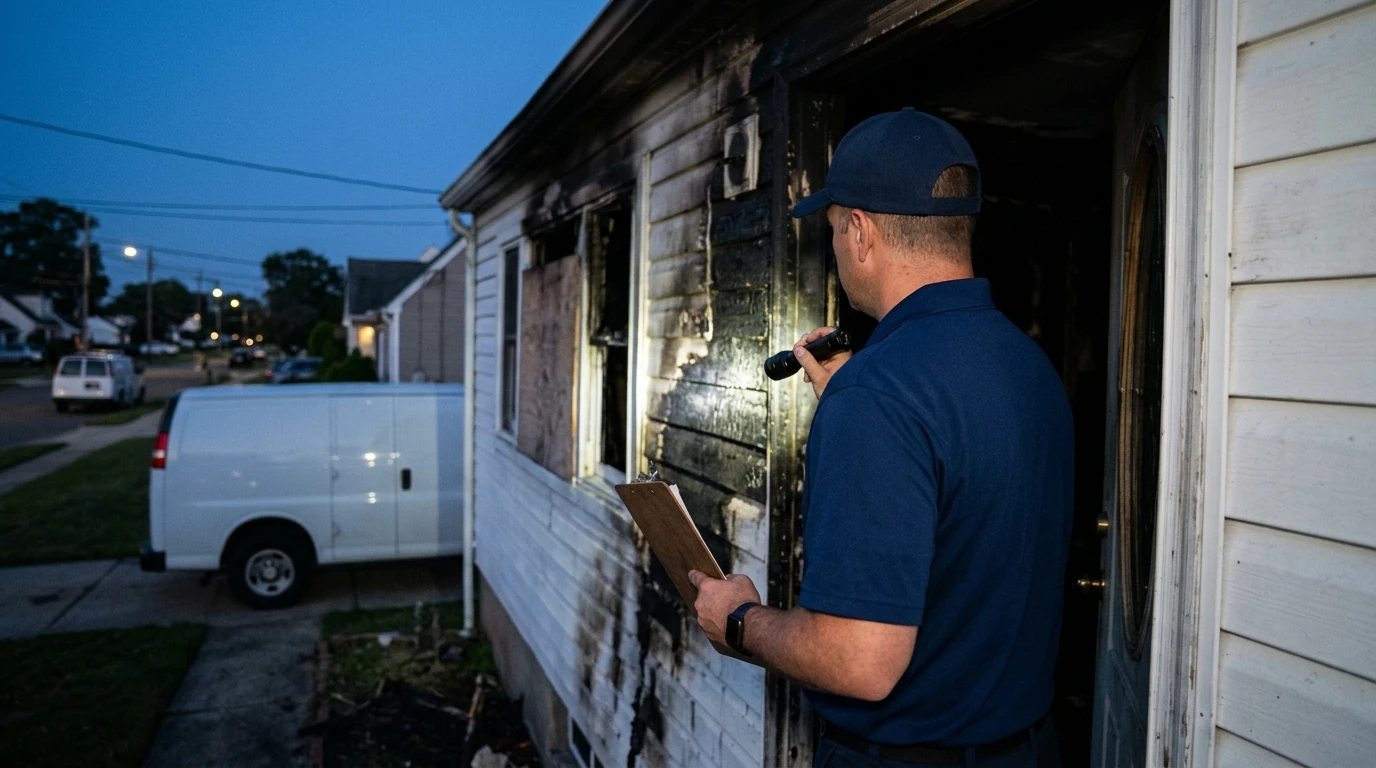
If your house just caught fire in Hicksville, the order you make calls in matters, both for your safety and for your insurance claim. Call 911 first, every time, even if the fire looks out and everyone is safe outside. Once the fire department clears the structure and hands the property back to you, call your insurance company to open a claim, then call a restoration company for emergency board-up, soot containment, and extraction of the water firefighting crews left behind. DISASTER RECOVERY 24/7 SPECIALISTS.COM answers that third call around the clock at (631) 831-1880, with IICRC-certified technicians who can secure the property and start mitigation before the damage gets worse.
What’s the right order to call after a house fire?
The order is 911 first, your insurance company second, and a licensed restoration company third, usually all within the same day. Each call does a different job, and skipping one or doing them out of order can cost you time or money on the claim.
911 gets the fire out and keeps everyone, including firefighters, safe. Your insurer opens the claim file and gives you a claim number, which the restoration company will need to coordinate billing. The restoration company secures the structure, documents the damage with photos before anything is touched, and starts drying out the water used to fight the fire.
Don’t wait on any of these. A home left open to weather or unsecured overnight invites more damage, and insurers expect homeowners to limit further loss once it’s safe to do so.
When does the fire department let you back into your home?
You’re usually let back in once firefighters confirm all hot spots are fully out and the structure is safe to enter, which can take anywhere from a few hours to overnight. If the fire looks like it may have started electrically or the cause is unclear, a fire marshal may need to investigate first, which can add another day before you’re cleared to go back in on your own.
Until you’re cleared, stay out, even if the front rooms look fine. Smoldering material inside walls and attics can reignite, and structural damage isn’t always visible from the doorway.
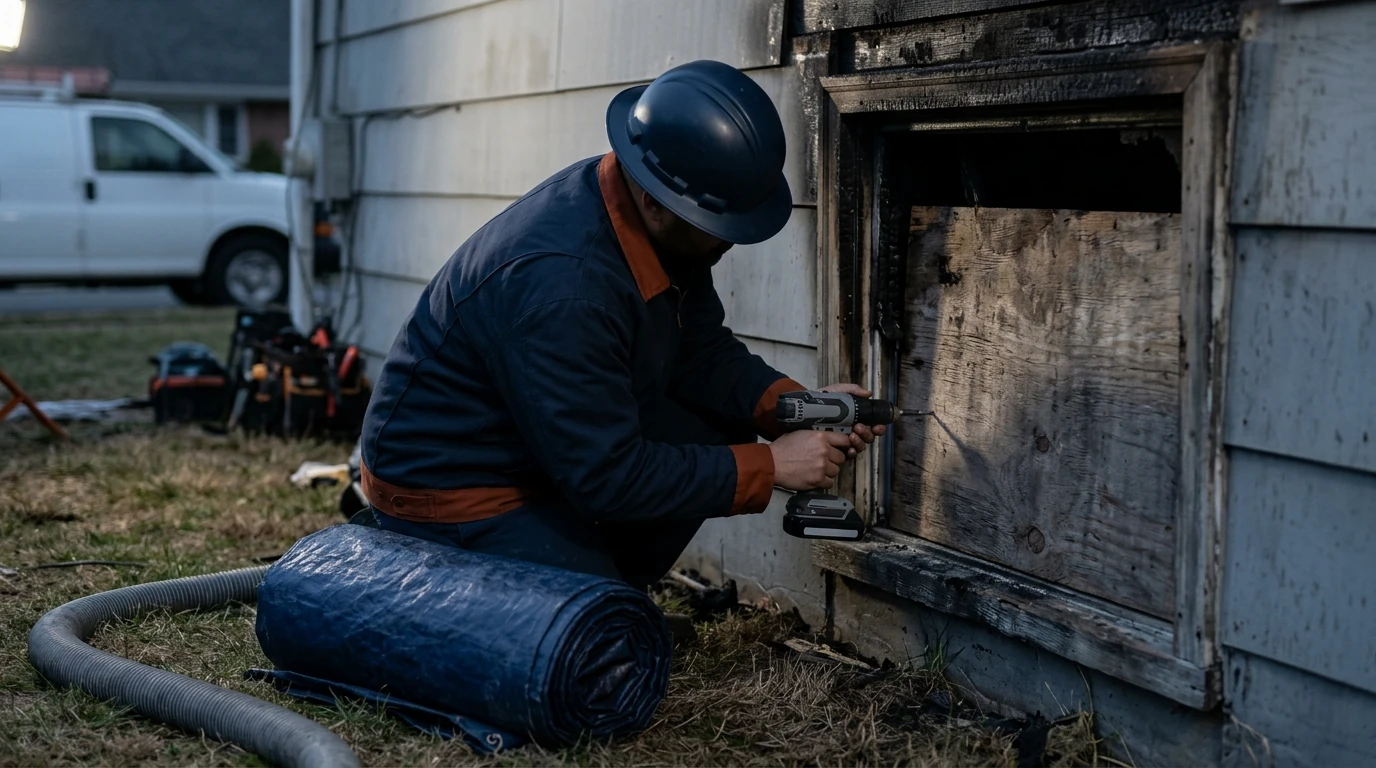
Why do board-up and water extraction need to happen fast?
A fire-damaged home left open and wet invites a second disaster on top of the first. Broken windows, a burned-through section of roof, or a kicked-in door leave the property exposed to weather, animals, and theft, and the water used to put the fire out starts causing its own problems within a day.
Mold can begin growing on wet materials within 24 to 48 hours, according to the EPA. That clock doesn’t pause because the fire is already out. Board-up and tarping close the structure back up, and water extraction pulls out the standing water and starts drying wall cavities and subfloor before mold or rot sets in. For the full sequence of what happens after that, see our fire damage restoration process breakdown.
Should I call my insurance company or a restoration company first?
Call your insurer first to open the claim, but don’t wait for an adjuster to show up before you secure the property. Most homeowners policies include a duty to mitigate further damage, which New York’s Department of Financial Services notes is a standard expectation under most policies, and a restoration company can start that work immediately while documenting everything for the adjuster.
In practice, most homeowners in Hicksville, Levittown, and Bethpage call both within an hour or two of each other. A written scope of work and before-photos from the restoration crew make the adjuster’s job easier and protect what you’re owed. If you want a sense of what a typical Long Island claim and repair runs, our fire damage restoration cost breakdown covers the ranges.
Should I clean up smoke and soot myself?
Don’t wipe down soot before a professional assesses it. Dry-wiping soot with a rag or paper towel grinds it deeper into drywall, fabric, and grout, and makes the eventual cleanup harder, not easier.
Soot from a house fire often carries residue from burned synthetics, plastics, and electronics, which behaves differently than ash from a wood fire. Professional smoke and soot removal follows the ANSI/IICRC S700 fire and smoke restoration standard, which calls for testing the type of residue before choosing a cleaning method, since the wrong cleaner can set some soot permanently into porous surfaces.
What if I can’t stay in my home?
If the fire department or your insurer determines the home isn’t safe to occupy, the American Red Cross can arrange emergency shelter and help coordinate recovery resources for Nassau County residents. Their recovering from a home fire guide covers what to expect in the first days.
Most homeowners policies also include additional living expenses (ALE) coverage, which can reimburse hotel stays and meals while the home is uninhabitable. Ask your adjuster about ALE specifically; it’s easy to overlook in the stress of the first 24 hours.
Once the property is secured and drying is underway, the rebuild phase, from framing to drywall to flooring, is a separate conversation with your reconstruction contractor. Call DISASTER at (631) 831-1880 to get a licensed crew securing the property and documenting the damage today.
About DISASTER RECOVERY 24/7 SPECIALISTS.COM
DISASTER RECOVERY 24/7 SPECIALISTS.COM has served Hicksville and the surrounding Long Island communities since 2008. The company holds IICRC certifications in water restoration (WRT), fire and smoke restoration (FSRT), mold remediation (AMRT), and structural drying (ASD), and operates a 24/7 emergency line for fire damage restoration, smoke damage restoration, water damage restoration, sewage cleanup, mold remediation, and reconstruction across Hicksville, Levittown, Hempstead, Plainview, and nearby towns.