24/7 Emergency Water Damage Restoration in Hicksville
24/7 emergency water damage restoration in Hicksville and surrounding areas. IICRC-certified technicians, insurance billing accepted. Call (631) 831-1880.
Water damage emergency in Hicksville? We answer 24/7. Call now and our crew heads out to stop the water and start drying your property.
Water sitting under laminate flooring for more than 48 hours stops being a cleanup job and starts being a demolition job. That’s the line most homeowners in Hicksville don’t realize they’ve crossed until the flooring cups, the baseboards swell, and a smell settles into the subfloor that no amount of fans will fix. Water damage restoration is the work of catching that timeline early: pulling the water out, drying the structure properly, and documenting it the way your insurance adjuster expects to see it.
What Water Damage Restoration actually involves
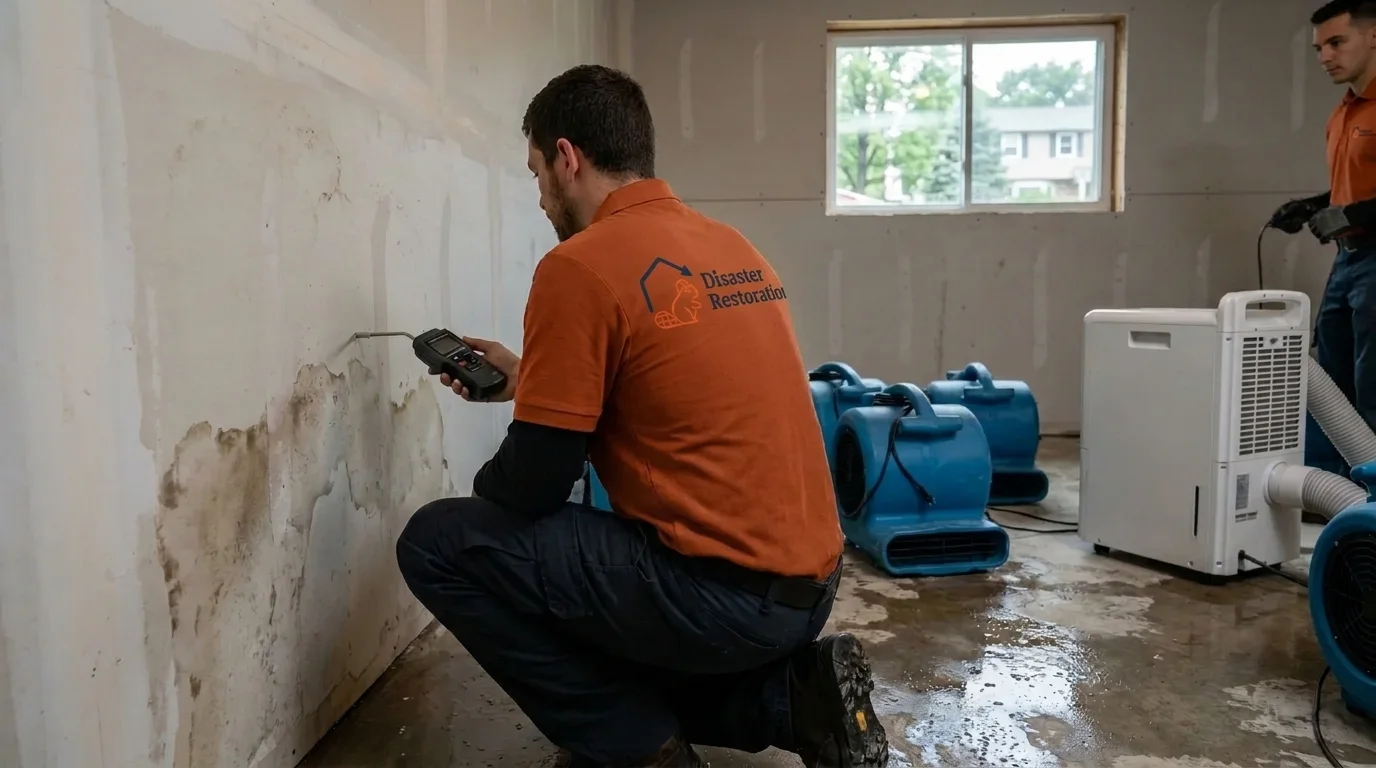
This isn’t shop-vacuuming a puddle. Real water damage restoration starts with identifying the water’s category (clean supply line, gray water from an appliance, or contaminated water) because that classification drives every decision after it, including what materials can be dried in place and what has to come out. Technicians use moisture meters and thermal imaging to find water that’s traveled into wall cavities or under subflooring where it isn’t visible from the surface. Extraction equipment removes bulk water first; then industrial air movers and dehumidifiers run for days, not hours, while daily moisture readings track whether the structure is actually drying or just evaporating at the surface while staying wet underneath. For Category 2 or 3 water, containment barriers keep affected air from spreading contamination into dry areas of the home.
Our process
- Moisture mapping. Before anything gets removed, we map the extent of the water with meters and imaging so the scope of work is based on where the water actually went, not just where it’s visible.
- Extraction. Standing water comes out with truck-mount or portable extraction units, pulled from flooring, carpet pad, and cavities before it migrates further into the structure.
- Containment and category control. For gray or black water losses, we isolate the affected zone to keep contaminated air and materials away from the rest of the home.
- Structural drying. Air movers and dehumidifiers are positioned based on the moisture map, not guesswork, with daily readings logged against drying goals.
- Monitoring to dry standard. Drying isn’t done on a timer. It’s done when moisture content in the studs, subfloor, and drywall actually reads dry, confirmed and documented before equipment comes out.
What separates a good water damage response from a bad one
The most common mistake is treating the surface as the whole problem. A floor can feel dry to the touch while the subfloor underneath stays saturated for a week, which is exactly how hidden mold growth gets started behind baseboards and under cabinetry. Another frequent miss: pulling drying equipment too early because the visible carpet feels dry, without confirming moisture content in the framing with a meter. Adjusters look for documented, dated moisture readings at each visit, not a single before-and-after photo, because that log is what proves the structure was dried to an accepted standard rather than just dried enough to stop complaints. Technicians holding IICRC water and structural drying certifications are trained to follow that documentation discipline, which matters both for the quality of the dry-out and for how cleanly a claim moves through your carrier.
What does Water Damage Restoration cost?
Costs vary with how much water intruded, how long it sat, what category it falls under, and what materials were affected. These are typical industry ranges, not a quote: every loss gets its own written scope from us before work starts, so you know what’s included and what isn’t.
| Scenario | Typical range |
|---|---|
| Single room, clean water, caught early | $1,200 - $3,500 |
| Multi-room water intrusion, clean to gray water | $3,500 - $8,000 |
| Water damage with flooring and drywall removal | $6,000 - $15,000 |
| Contaminated (Category 3) water with containment | $8,000 - $20,000+ |
| Whole-floor structural drying, extended timeline | $10,000 - $25,000+ |
Most homeowners insurance policies cover sudden and accidental water damage, such as a burst pipe or appliance failure, though coverage and deductibles vary by policy and by cause. We document the loss and work with your carrier directly so the claim reflects what actually happened to the structure.
Seasonal & regional considerations
Long Island winters bring freeze-thaw cycles that stress older plumbing, and Hicksville’s mix of mid-century and newer construction means pipe materials and insulation levels vary a lot from block to block. A pipe that freezes and splits in an uninsulated crawl space or exterior wall can release water for hours before anyone notices, which is why response speed matters as much in January as it does during a summer storm.
Service area
We respond to water damage calls throughout Hicksville and the surrounding Nassau County communities. If you’re searching for help in a specific nearby town, our location pages cover what’s typical for that area’s housing stock and drainage conditions.
If water is actively spreading through your home right now, schedule your moisture assessment before the next 24 hours turn a one-room problem into a whole-floor one. Call (631) 831-1880 and we’ll walk you through what to do while help is on the way.
Services We Handle
- Water Mitigation
- Wet Carpet Drying
Frequently Asked Questions
Does homeowners insurance cover water damage restoration?
How long does structural drying typically take?
What's the difference between water extraction and structural drying?
Can I stay in my home during water mitigation?
How do you know if water damage has reached areas I can't see?
Looking for the best water damage restoration company in Hicksville?
DISASTER RECOVERY 24/7 SPECIALISTS.COM provides water damage restoration in Hicksville, NY and the surrounding area, and has served local property owners since 2008. Customers rate us 5.0 out of 5 stars across 18 Google reviews. We answer calls 24/7 — call (631) 831-1880 for immediate help.
Need Water Damage Restoration now?
We respond 24/7 across Hicksville and surrounding NY cities.
Related Coverage
- Our Restoration Services
- Contact DISASTER RECOVERY 24/7 SPECIALISTS.COM
- 24/7 Emergency Water Damage Restoration in Bethpage
- 24/7 Emergency Water Damage Restoration in Freeport
- 24/7 Emergency Water Damage Restoration in Hempstead
- 24/7 Emergency Water Damage Restoration in Levittown
- 24/7 Emergency Water Damage Restoration in Massapequa
- 24/7 Emergency Water Damage Restoration in Plainview
- 24/7 Emergency Water Damage Restoration in Syosset
- 24/7 Emergency Water Damage Restoration in Westbury
- 24/7 Emergency Water Removal & Cleanup in Hicksville
- Burst Pipe Emergency Checklist: Step-by-Step Response
- What To Do in the First 24 Hours After Water Damage
- How To Choose a Restoration Company in Hicksville (Without Getting Burned)