TL;DR: Mold remediation in Hicksville, NY typically costs $500 to $1,500 for a small bathroom or closet, $1,500 to $4,000 for a single room, and $3,000 to $12,000 or more for a basement, attic, or crawl space job that involves containment and material removal. New York law requires a separate, independent mold assessor for larger jobs, which adds $300 to $800 on top of remediation. Homeowners insurance usually covers mold only when it results from a sudden, covered water loss, not from long-term moisture or poor ventilation.
If you just got a mold inspection report back, or you’re staring at a damp patch in your Hicksville basement after last week’s rain and trying to figure out what this is going to cost before you call anyone, here’s the honest breakdown. Prices on Long Island vary by how much square footage is affected, whether the mold reached HVAC ductwork, and whether New York’s assessment law applies to your job. None of these numbers are a quote, just what homeowners in Nassau County typically see.
How much does mold remediation cost in Hicksville, NY?
Most Hicksville homeowners pay somewhere between $500 and $12,000 for mold remediation, with the final number driven almost entirely by square footage and whether porous materials like drywall or subfloor need to be removed.
A small, contained job, like mold around a bathroom exhaust fan or behind a leaking washing machine, sits at the low end because it needs minimal containment and a day or two of labor. A basement or crawl space job with hidden moisture behind finished walls costs more because crews have to open walls, run negative-air containment for days, and sometimes bring in a dehumidification setup similar to what’s used for crawl space encapsulation. Here’s how that breaks down by job type.
| Job Type | Typical Cost Range |
|---|---|
| Small area (bathroom, closet, under 10 sq ft) | $500 - $1,500 |
| Single room, moderate growth (10-100 sq ft) | $1,500 - $4,000 |
| Basement mold remediation (100-500 sq ft) | $3,000 - $8,000 |
| Attic mold remediation | $2,500 - $6,000 |
| Crawl space mold with encapsulation | $4,000 - $12,000+ |
| Whole-house or HVAC-involved mold | $10,000 - $30,000+ |
Split-level and colonial homes common across Hicksville, Levittown, and Bethpage often develop attic mold from poor roof ventilation and basement mold from older foundations without a modern vapor barrier, so those two categories come up constantly in this market.
What drives the price up or down?
The single biggest cost driver is how much material has to come out, not how much mold you can see on the surface.
A few factors matter most:
- Square footage affected. Remediation crews price by the area needing containment and treatment, not just the visible stain.
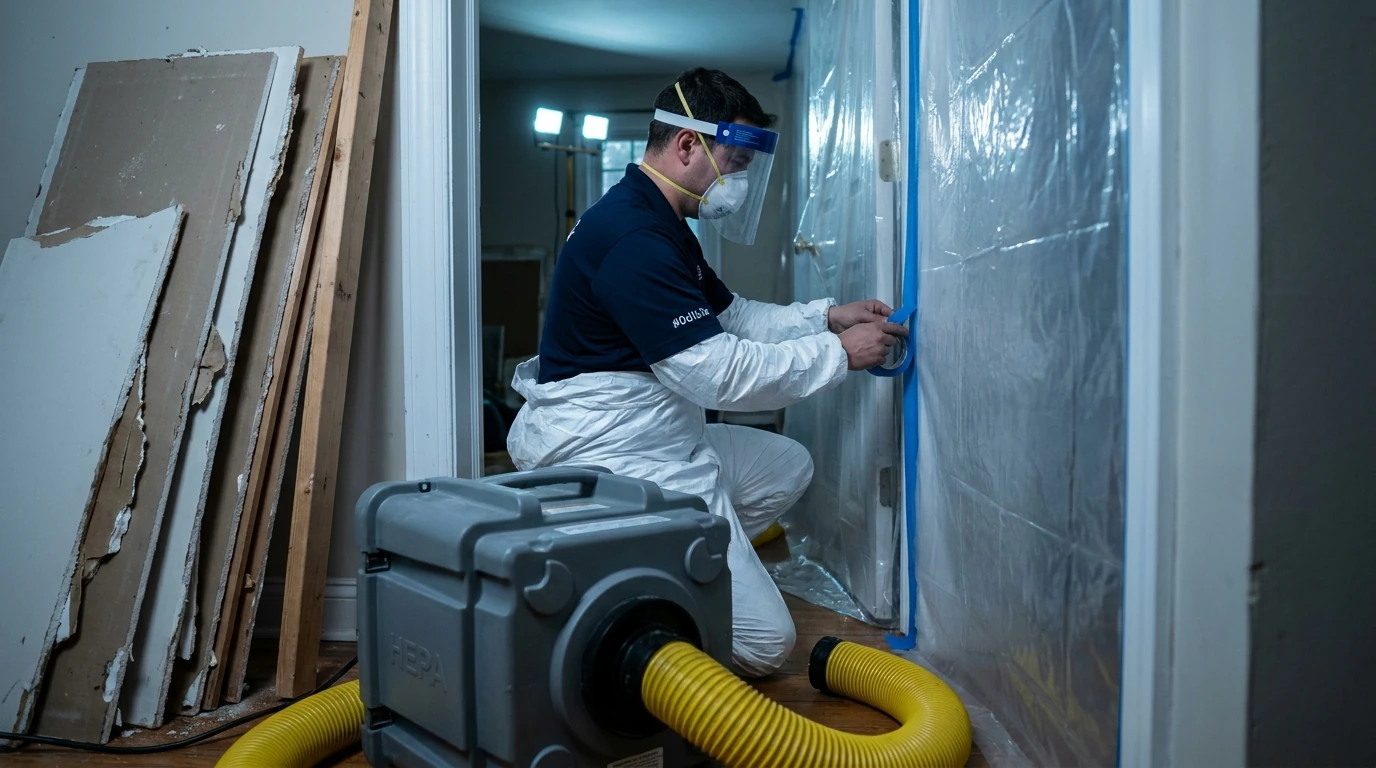
- Containment complexity. Mold behind finished walls, under flooring, or in a crawl space needs full poly containment and negative air pressure, following the ANSI/IICRC S520 standard for mold remediation. That adds labor hours a surface wipe-down doesn’t.
- HVAC involvement. If spores reached supply or return ducts, the whole system needs cleaning or partial replacement, which can add several thousand dollars.
- Porous material removal. Drywall, insulation, and subflooring that absorbed moisture usually get removed and replaced rather than cleaned, per EPA mold cleanup guidance. Removal plus rebuild is where a job moves from a few thousand dollars into five figures.
- Source repair. If a slow plumbing leak caused the mold, that leak has to be fixed first, often with leak detection to confirm it’s actually stopped before remediation starts.
Why is there a separate assessment fee in New York?
New York requires an independent, licensed mold assessor, separate from the remediation contractor, for any job involving more than 10 square feet of visible mold.
This is state law (New York Labor Law Article 32), not an upsell. The assessor inspects the property, writes a remediation work plan, and later returns after the work is done to run clearance testing confirming the space is safe to reoccupy. Because that assessor can’t be the same company doing the remediation, homeowners typically budget $300 to $800 for the pre-work assessment and a similar range for post-work clearance testing, on top of the remediation cost itself. Jobs under 10 square feet are exempt from the assessor requirement, which is part of why small bathroom jobs come in so much cheaper. If you’re not sure whether your situation qualifies, our mold inspection and testing page walks through what that first visit looks like, and our guide on how to test for mold covers DIY kits versus a professional inspection.
Does homeowners insurance cover mold in New York?
Mold coverage is often limited or capped under a standard New York homeowners policy, and it’s usually only available when the mold resulted from a sudden, covered water loss, not from a slow leak or humidity buildup over time.
A burst pipe that gets mold growing within the EPA’s documented 24-to-48-hour window may trigger coverage for the resulting remediation, since the water damage itself was sudden and accidental. Mold that developed because of a leaky roof you’d known about for months, or chronic basement dampness, typically falls outside standard coverage as a maintenance issue. Most policies that do cover mold cap the payout, sometimes as low as $1,000 to $10,000, regardless of the actual remediation cost. Check your declarations page for a mold endorsement or rider, and see our breakdown on whether insurance covers water damage for how the underlying cause gets classified. For general background on what a standard policy does and doesn’t cover, the Insurance Information Institute is a solid starting point.
What does the remediation process actually involve?
A typical Hicksville mold job runs through five phases, from assessment to clearance, usually over three days to two weeks depending on scope.
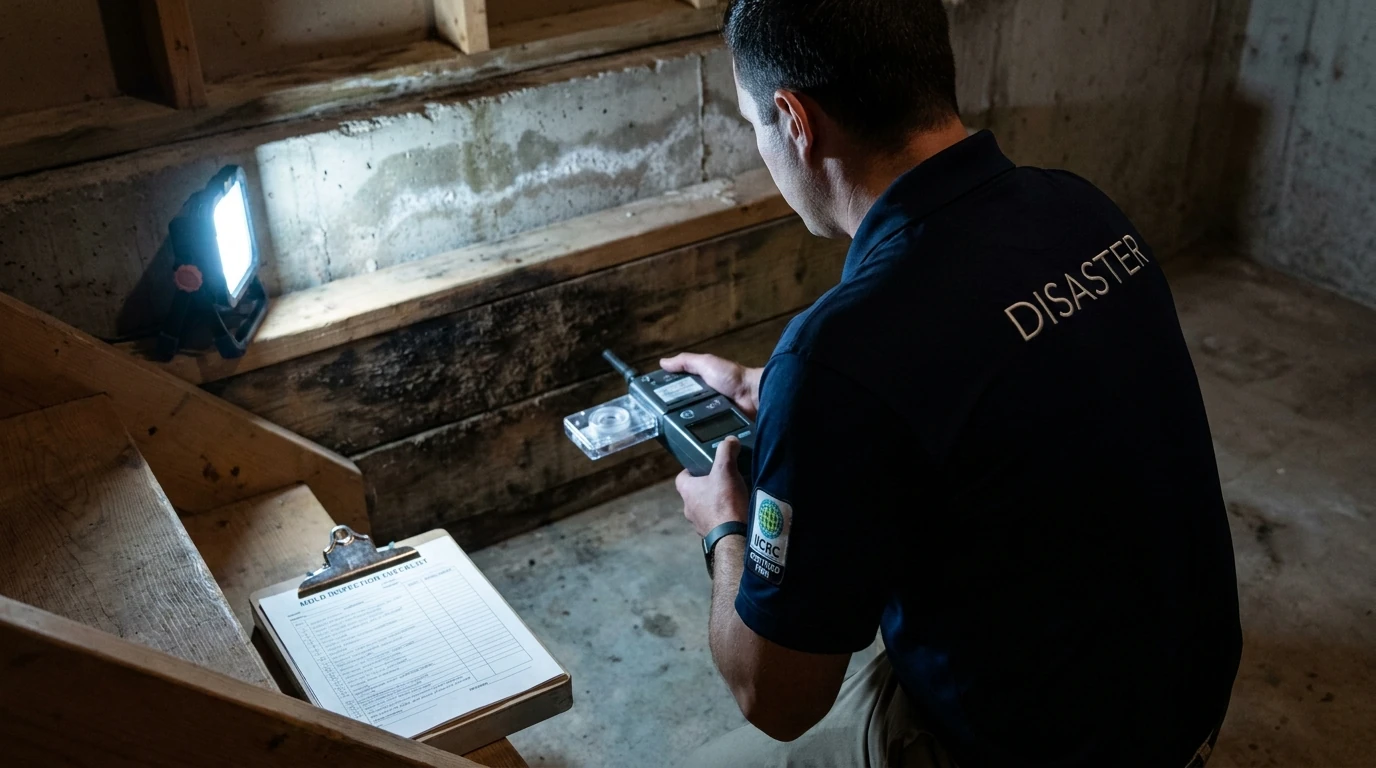
- Independent assessment. A licensed assessor inspects, samples if needed, and writes the remediation work plan required by New York law.
- Containment setup. Crews seal the work area with poly sheeting and set up negative air pressure so spores don’t spread to the rest of the home.
- Removal and treatment. Affected porous materials come out; non-porous surfaces get HEPA-vacuumed and treated with an EPA-registered antimicrobial.
- Drying and air scrubbing. HEPA air scrubbers run until airborne spore counts drop, and any underlying moisture source gets corrected.
- Clearance testing and rebuild. The independent assessor returns to confirm the space passes clearance, then rebuild (drywall, flooring, paint) can begin.
If you’re trying to decide who should handle your specific situation, calling DISASTER RECOVERY 24/7 SPECIALISTS.COM at (631) 831-1880 gets you a remediation plan and a written scope before any work starts, which is the only way to know what your job will actually cost. Every property is different, and a written scope based on an on-site assessment is the only reliable number, not a phone estimate.
If you’ve got a musty smell in a Hicksville basement or an attic stain you’re not sure is active growth, the next useful step is an inspection, not a guess. A written scope and a clear sense of whether New York’s assessor requirement applies to your job will tell you more than any online calculator can.
About DISASTER RECOVERY 24/7 SPECIALISTS.COM
Disaster Recovery 24/7 Specialists employs IICRC-certified technicians serving Hicksville, NY and surrounding Long Island communities since 2008, licensed and insured, with technicians holding IICRC AMRT mold remediation certification along with water, fire, and structural drying credentials. The company handles mold remediation, mold inspection and testing, water damage restoration, water leak detection, crawl space encapsulation, fire and smoke damage restoration, sewage cleanup, reconstruction, and general contracting across Hicksville, Hempstead, Levittown, Freeport, Plainview, Massapequa, Syosset, Westbury, and Bethpage, available 24/7.