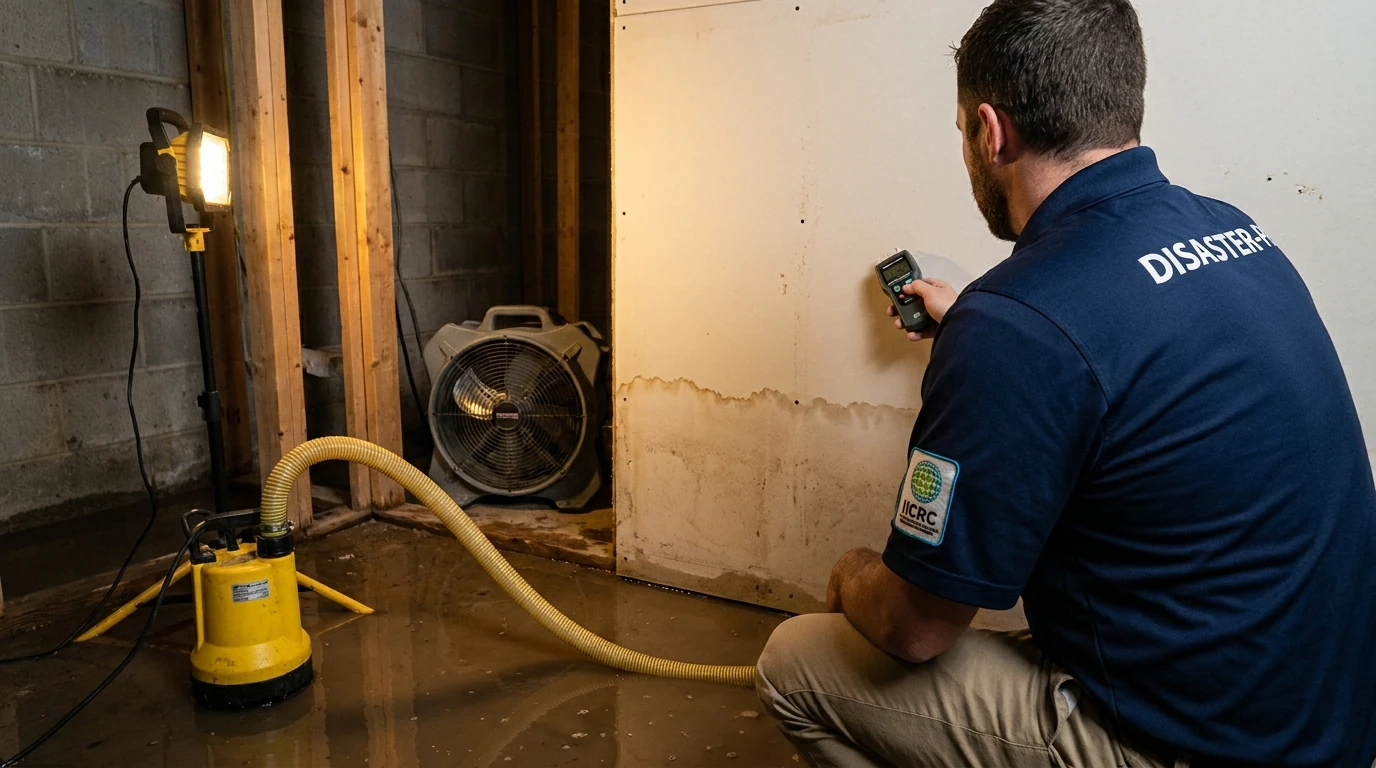
TL;DR: A flooded basement needs two different kinds of help depending on the cause. If water is still flowing from a burst pipe, failed water heater, or broken supply line, a plumber stops the source first. Once the source is shut off, or if the flooding came from groundwater, storm runoff, or a sewage backup, a water damage restoration company handles extraction, drying, and sanitizing, ideally within 24 to 48 hours before mold sets in.
If your Hicksville basement is taking on water right now, the first call depends on where the water is coming from. For flooding from groundwater, storm runoff, or a sewage backup, or once an active leak has already been shut off, call DISASTER RECOVERY 24/7 SPECIALISTS.COM at (631) 831-1880. The crew holds IICRC certifications in water damage (WRT) and structural drying (ASD) and answers 24/7, which matters on Long Island, where a high water table and older split-level foundations turn a wet basement into a mold problem within a day or two.
Is This a Plumber Job or a Restoration Company Job?
It comes down to whether water is still actively flowing. A plumber’s job is to find and stop the source: a cracked supply line, a failed shutoff valve, a water heater that’s split at the seam. A restoration company’s job starts the moment that source is controlled: pulling standing water, drying the structure, and getting ahead of mold.
For a burst pipe or supply line failure, shut off the water at the main valve and call a plumber to repair the line. DISASTER does not perform plumbing repairs, but once the leak is stopped, their emergency water removal crew extracts standing water and sets up drying equipment before the subfloor and drywall absorb more than they already have. Our burst pipe emergency checklist walks through the shutoff steps in more detail.
For a flooded water heater, the same split applies. A plumber or appliance tech replaces the failed tank or relief valve. The restoration side covers extracting the water that pooled around it and drying out the insulation, subfloor, and any drywall it reached under a water heater flood cleanup scope.
For groundwater or storm runoff after heavy rain on Long Island, there’s usually no fixture to repair, so there’s no plumber call to make. You go straight to a basement flooding cleanup crew for extraction, dehumidification, and a look at whether the sump pump or foundation needs attention to prevent a repeat.
What If the Water Is a Sewage Backup?
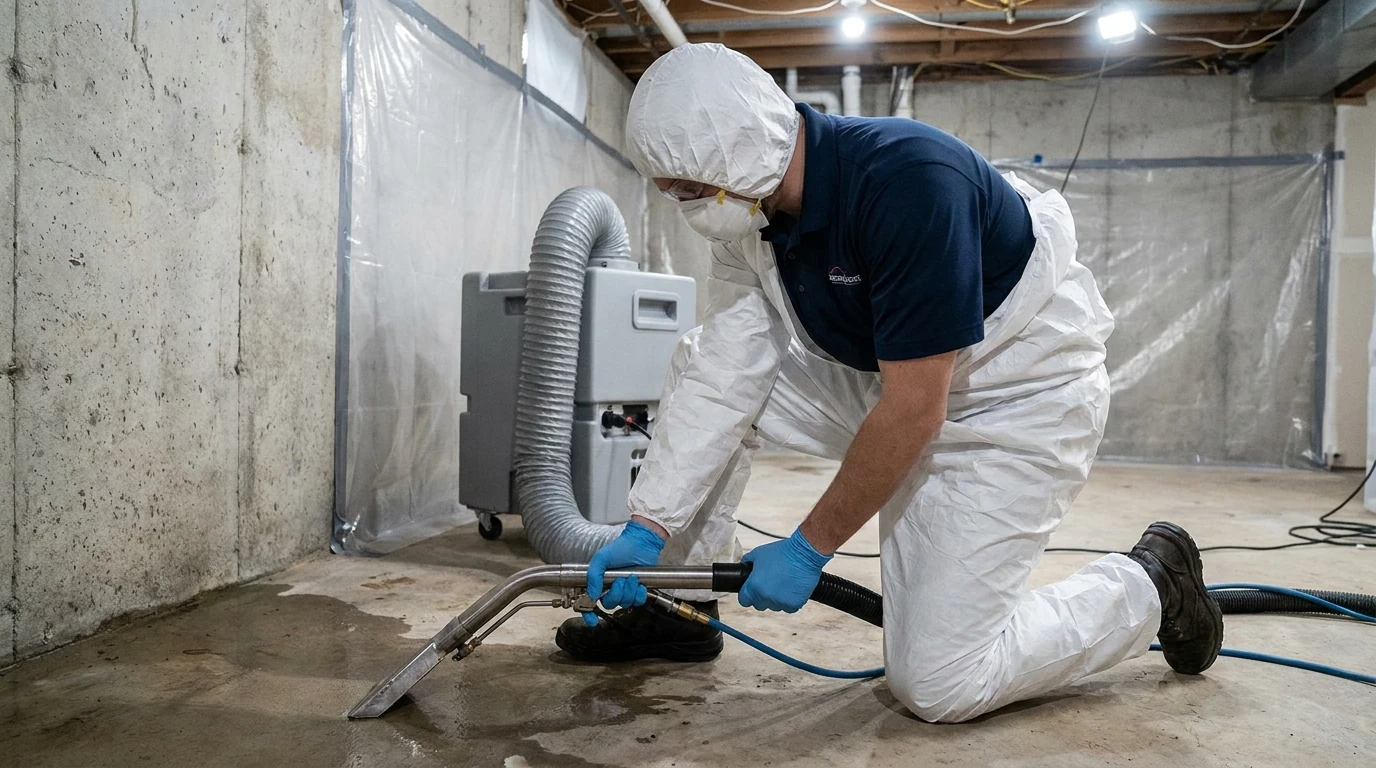
A sewage backup is never a DIY job, and it’s rarely a plumber-only job either. Sewage is classified as Category 3, or “black water,” under the ANSI/IICRC S500 standard, meaning it’s contaminated with bacteria and pathogens that require containment, PPE, and disposal protocols a general cleanup can’t provide.
A plumber may still need to clear whatever caused the backup, a clogged main line or a failed check valve, but the cleanup itself belongs with a sewage cleanup crew trained to handle contaminated water safely. The CDC’s guidance on cleaning safely after a disaster is worth a read if you’re tempted to handle it yourself: gloves and a mop aren’t enough protection against what’s actually in that water.
How Fast Do You Need to Act Before Mold Starts?
Mold can begin colonizing wet drywall, subfloor, and framing within 24 to 48 hours of standing water, which is why drying standards under IICRC S500 treat that window as the real deadline, not when an appointment happens to open up. Once porous materials stay damp past that point, the question shifts from drying the space to remediating mold growth inside it.
That’s the practical reason to get extraction and drying equipment running the same day water appears, not after it’s had a chance to sit. The EPA’s guidance on mold cleanup echoes the same timeline: get materials dry fast, or expect to deal with mold next. If you’re already past that window and seeing discoloration or a musty smell, our post on what to do in the first 24 hours after water damage covers what’s salvageable and what isn’t.
What Happens When You Call?
When you call, expect a short set of questions: where the water is coming from, whether it’s still flowing, roughly how much standing water there is, and whether it’s clean water, gray water, or sewage. Having that information ready, plus photos if you can safely take them, speeds up dispatch and gives the crew a head start on what equipment to bring.
On arrival, the crew maps moisture levels with meters before removing a single piece of drywall, documents the damage for your insurance claim, and sets up extraction and drying equipment calibrated to the category of water involved. From there, water damage restoration covers monitoring and adjusting drying equipment daily until the structure reads dry, not just dry to the touch.
A flooded basement rarely has one clean answer. Figure out whether water is still actively flowing from a source, handle that side with a plumber if it is, and bring in a restoration crew for everything the water already touched. Call DISASTER RECOVERY 24/7 SPECIALISTS.COM at (631) 831-1880 to get extraction and drying started before the 24 to 48 hour mold window closes.
About DISASTER
DISASTER RECOVERY 24/7 SPECIALISTS.COM, founded in 2008, employs IICRC-certified technicians serving Hicksville and the surrounding Nassau County area, including Levittown, Plainview, Hempstead, and Massapequa. Their technicians hold IICRC credentials in water damage restoration (WRT), structural drying (ASD), fire and smoke restoration (FSRT), and mold remediation (AMRT), and the company operates on a 24/7 basis for water, fire, mold, and sewage cleanup calls across Long Island.